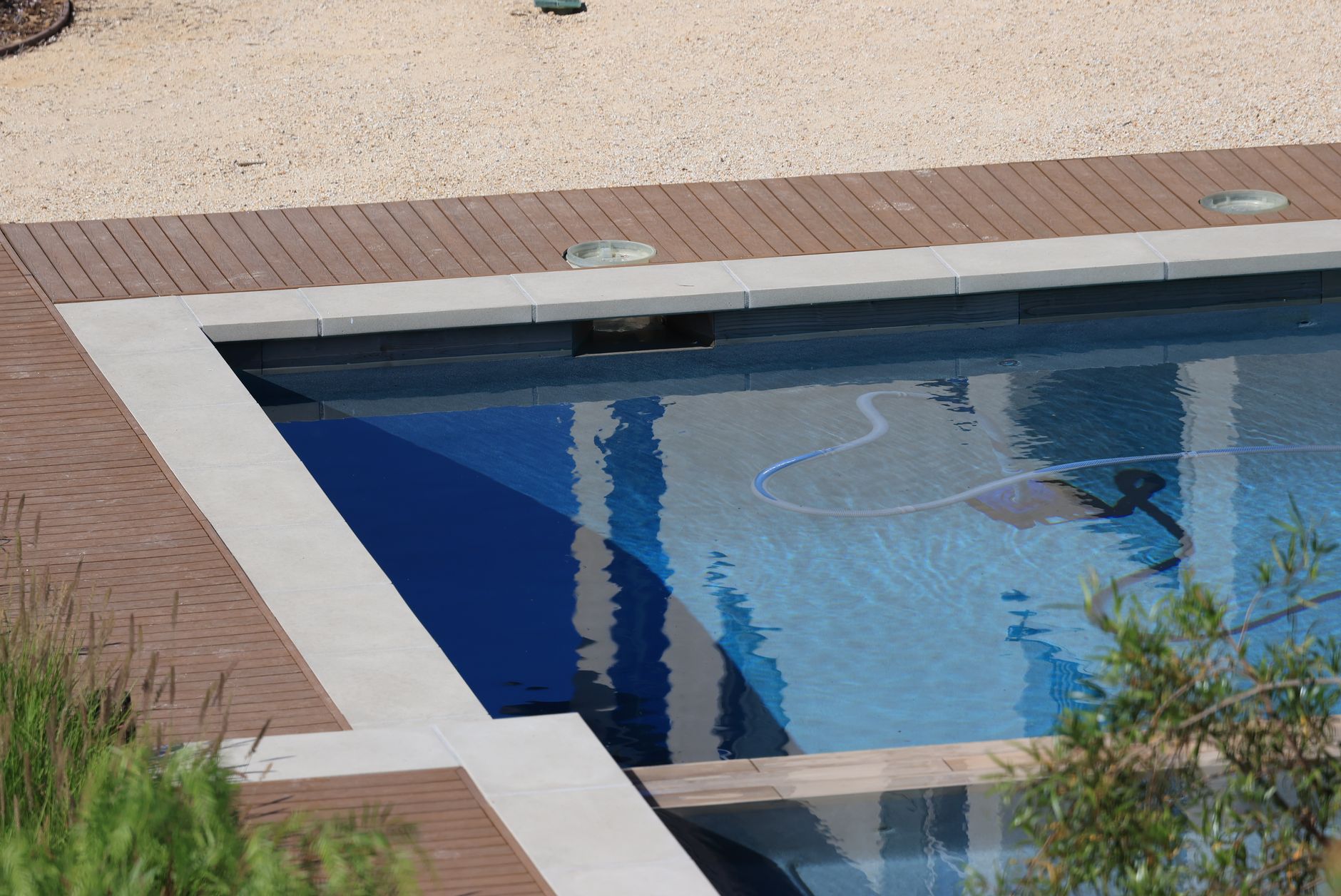
In short: This guide explains deck pool property tax in plain English — what it means, what actually decides it, and what to do next — so you can understand deck pool property tax without wading through a county PDF.
The deck pool property tax question comes up every summer, and it deserves a straight answer. You are thinking about a new deck out back, or an in-ground pool for the grandkids. Then a neighbor says it will send your tax bill through the roof.
Maybe you already built one, and your assessment notice just arrived higher than last year. Either way, you want facts, not scare talk. Here is the honest version: in most cases, a permanent addition like a deck or an in-ground pool does raise your assessed value, but usually by far less than what you paid for it. The deck pool property tax effect is real, but it is smaller and more controllable than most people think.
How the deck pool property tax increase actually happens
First, two terms. Market value is what your home would sell for. Assessed value is the number your county uses for taxes. In many places the assessed value is only a percentage of market value. Your bill is that assessed value, minus exemptions, multiplied by the mill rate (also called millage) — the tax rate set by your local governments.
The trigger is almost always the building permit. When you pull a permit, your city or county sends a copy to the assessor’s office. After the work is done, an appraiser updates your property record card. That is the whole deck pool property tax chain: permit, inspection, record update, new value.
However, assessors generally do not add your construction cost to your value dollar for dollar. They add what the improvement contributes to market value. For example, a pool that cost a large sum may add much less than that to what a buyer would pay. This gap is the single most misunderstood part of the deck pool property tax picture.
Repairs versus new construction
Not every project counts. Assessors generally separate routine maintenance from new construction. Replacing rotted boards on an existing deck is usually maintenance. Building a deck where none existed is new construction. That distinction drives most of the deck pool property tax outcomes homeowners see.
Pools follow the same logic, based on permanence. An in-ground pool requires excavation and permits, so it is nearly always treated as a permanent improvement to real property. A portable above-ground pool that comes down each fall is often treated as personal property instead. But if you anchor it, deck around it, or hard-plumb it, many assessors will treat it as permanent. Rules on this vary widely, so confirm how your county handles it.
| Project | How assessors generally treat it | Likely deck pool property tax effect |
|---|---|---|
| Replacing boards on an existing deck | Repair or maintenance | Usually none |
| New attached deck or expanded deck | New construction, added structure | Value added for the new portion |
| In-ground pool | Permanent improvement to real property | Value added, often modest relative to cost |
| Portable above-ground pool | Often personal property | Often none — but confirm locally |
| Above-ground pool with surrounding deck and plumbing | May be reclassified as permanent | Value may be added |
| Pool removed or deck torn down | Requires you to notify the assessor | Value should come off |
One more thing worth knowing. Some states offer a home improvement exemption that shields part of an addition’s value for a set number of years. Others reassess only the new portion. A few reassess the whole property when major work is done. Your state and county decide this, so never assume your neighbor’s experience in another county applies to you.
What to do about your deck pool property tax before and after you build
Start before the first shovel. Call your county assessor’s office and ask, plainly, how a deck or pool is valued there and whether any improvement exemption applies. They will tell you. That one call removes most of the deck pool property tax guesswork.
After the work is done, read your next assessment notice line by line. Look at the improvement detail. Check the square footage of the deck, the pool size, and the year built. Errors are common. For example, an assessor may record a 200-square-foot deck as 400, or list an above-ground pool as in-ground. If the record is wrong, the deck pool property tax you owe is wrong too.
Now the part that costs homeowners the most money: there are two clocks, and they are different dates. The exemption application deadline is when you must apply for relief such as a homestead exemption (a reduction for your primary residence) or a home improvement exemption. The appeal deadline is when you must challenge the value itself before the board of review (the local panel that hears assessment disputes). Watching the wrong one loses you an entire year. Confirm both dates with your county assessor, in writing if you can.
Also remember that nothing here is frozen. Mill rates, median bills, and exemption amounts reset every year. Relief laws change continuously in state legislatures. The national average property tax bill runs roughly $4,271 per year, per Census-based figures reported by NAHB — but that is a national average only, and your bill may look nothing like it. Any estimate you read, including one from a contractor, is illustrative. Every property is different.
📨 Get Free Property Tax Guides Alerts
Free · No spam · Unsubscribe anytime
Finally, watch your escrow — the account your mortgage servicer uses to pay taxes and insurance for you. A higher bill often shows up months later as a higher monthly payment plus an escrow shortage. Budgeting for the deck pool property tax change up front prevents that surprise.
Frequently Asked Questions
Will my deck pool property tax go up if I build without a permit?
Skipping the permit does not make the value disappear. Assessors also use aerial imagery, sales records, and field reviews. As a result, unpermitted work is often discovered later, sometimes with back taxes or penalties, and it can complicate your sale or insurance claim.
Does a pool always add value when I sell?
Not always. In warm markets a pool can help; in colder ones many buyers see upkeep and liability instead. If your assessor added more value than local buyers actually pay for a pool, that is a reasonable basis for an appeal.
If I remove the deck or fill in the pool, does my assessment drop automatically?
Usually not. In most cases you must tell the assessor and request an inspection or record correction. Do it before your county’s assessment date, and confirm that date with your county assessor, since it varies.
Key point: When homeowners ask about deck pool property tax, the honest answer depends on the county they live in — this guide on deck pool property tax walks through what actually decides it.
Two Free Tools Before You Do Anything Else
Most homeowners can do this themselves, and it costs nothing. Start by finding out whether the assessor actually has your home valued too high — then find out how many days you have left to file, because that is the part people miss.
Property tax is not the only home cost worth a second look — many homeowners are also overpaying for home insurance. Compare at Home Insure Guide.
Sources & How to Verify
The rules in this guide on deck pool property tax come from official and authoritative sources. Property tax rates, median bills, and exemption amounts reset every year, and they vary by state, county, and school district — so always confirm the current figure, any exemption, and above all any deadline with your county assessor before you act:
- Tax Foundation: taxfoundation.org — property taxes by state and county.
- U.S. Census Bureau: census.gov — median property tax paid and home values.
- Lincoln Institute of Land Policy: lincolninst.edu — the standing 50-state property tax research.
- IAAO: iaao.org — the standards assessors are supposed to value property by.
- Your county assessor and state Department of Revenue: the only place your exact rate, exemption, and deadline are official.
Verified August 2026. Rates and exemption amounts reset every year; if you spot anything outdated, please contact us.
Related Deck Pool Property Tax Guides
More guides related to deck pool property tax:
- Are You Overpaying? Free Over-Assessment Check
- Property Tax Exemption Finder — What You Qualify For
- Your County’s Verified Appeal Deadline
- Property Tax Calculator — Any County
- Property Tax by State
- Property Tax by County
Disclaimer. This page is for general information only and is not legal, tax, or financial advice. Know Property Tax is an independent educational resource — we are not a government agency, a county assessor, a law firm, or a tax-appeal service. Property tax rates, exemption amounts, and deadlines change every year and vary by state, county, and school district, and any estimate is an illustration, not a prediction. Confirm your rate, any exemption, and above all any deadline with your county assessor before you act.